

European partners of the Solid Waste Reduction and Management (WARM) Project have just completed a two-country staff training mission to West Africa, visiting Sierra Leone from 29 September to 1 October and Ghana from 3 to 7 October 2026. The project is co-funded by the European Union through the Erasmus+ Capacity Building in Higher Education (CBHE) programme.
Sierra Leone, 29 September – 1 October
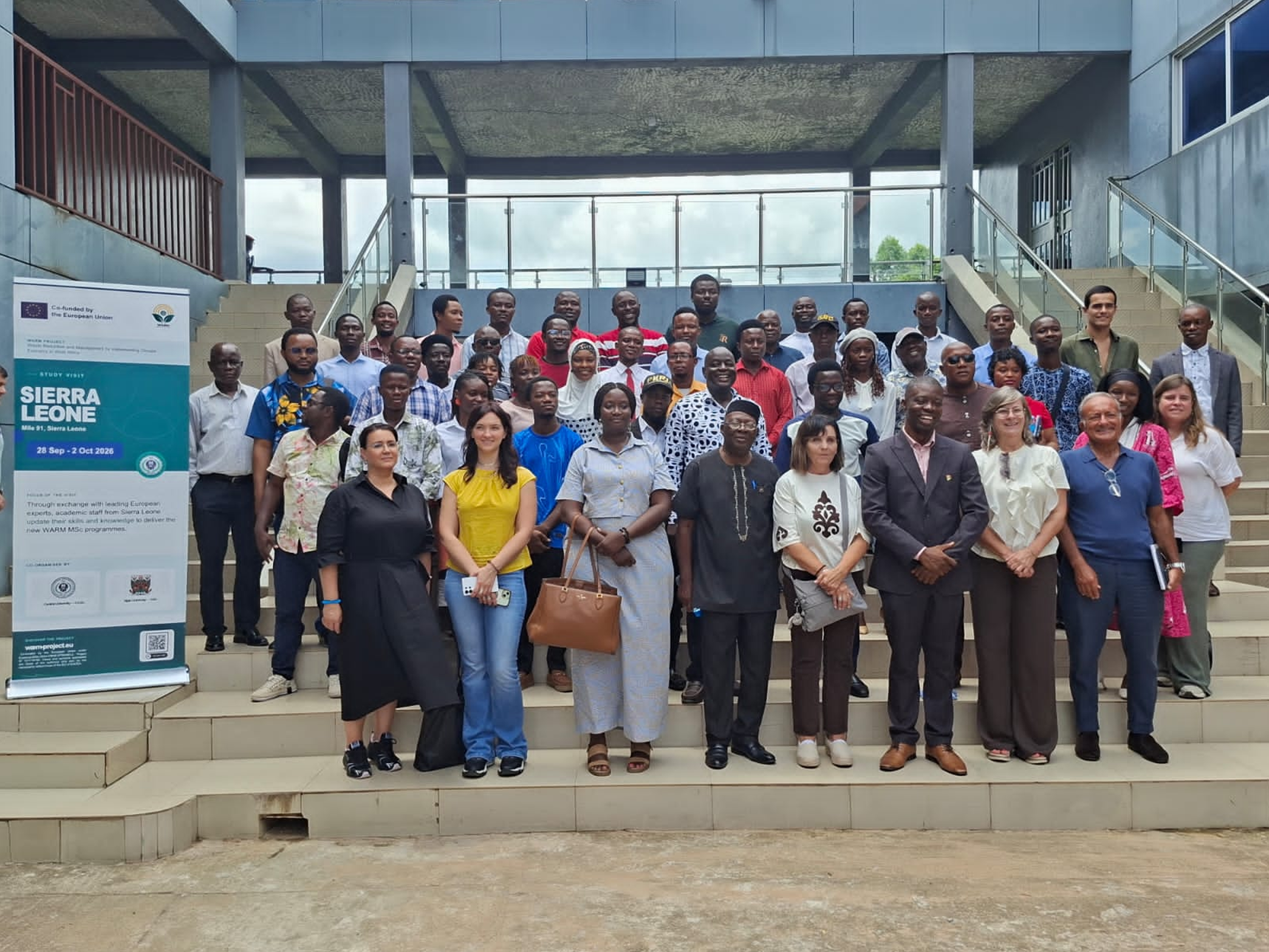
The mission began in Sierra Leone, where Central University and Njala University hosted the European delegation. The visit gave academic staff the chance to exchange knowledge with international experts in waste reduction, circular economy and sustainable resource management, and to build their own professional capacity in these fields.
Lecturers from both universities gained new perspectives and technical knowledge. They are now preparing to deliver postgraduate programmes that address current global challenges in waste management, including Sierra Leone’s own growing waste management needs.
Tamale, Ghana, 3 – 7 October
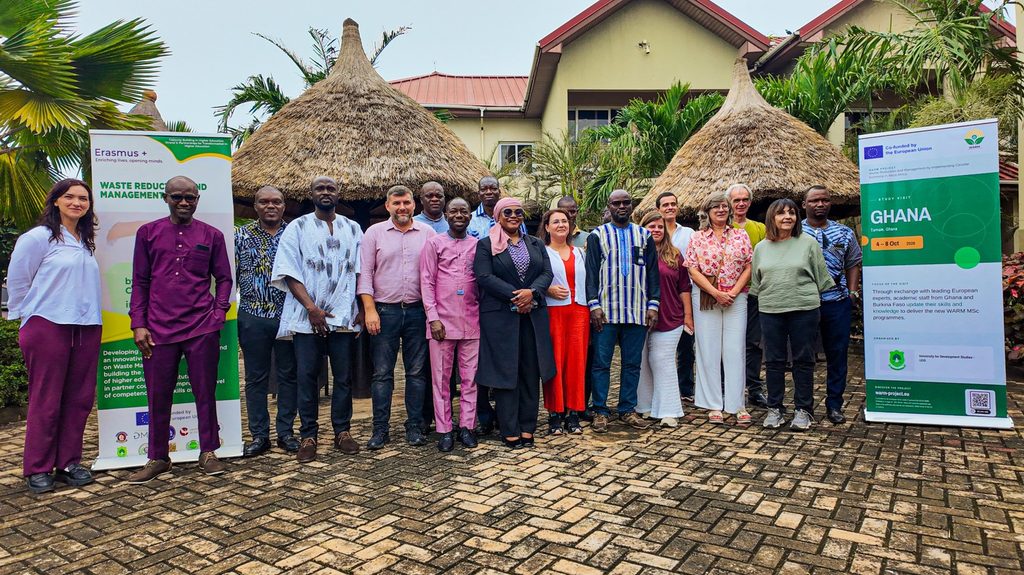
The delegation then travelled to Tamale, Ghana, where the University for Development Studies (UDS) hosted the European partners alongside colleagues from Dr. Hilla Limann Technical University (DHLTU) and from two Burkina Faso partners: Université de Ouahigouya (ULBO) and Université Ouaga I Professeur Joseph Ki-Zerbo (UJKZ). This brought the project’s partners from Ghana and Burkina Faso together for a further round of staff training.
The five-day programme at UDS continued the work begun in Sierra Leone. Academic staff shared experiences and teaching approaches, and worked together on the content and delivery of the new postgraduate programmes. Bringing institutions from across the region into the same training also strengthens cooperation between universities facing similar environmental challenges, so they can learn from one another.
A shared investment in local expertise
The two visits show the value of international partnerships for African higher education. Working alongside European institutions, the partner universities in Sierra Leone, Ghana and Burkina Faso are developing academic capacity, deepening research collaboration and preparing graduates with the skills their countries need for their environmental and development priorities.
The WARM Project is a practical investment in higher education, environmental sustainability and the local expertise needed to tackle waste management challenges across West Africa.